
Our Vision
To emerge as a Centre of Excellence in Pharmaceutical Education, Research, and Healthcare Services.
A two‑year diploma in pharmacy for entry‑level pharmacy practice.
The Diploma in Pharmacy (D.Pharm) at Pimpri Chinchwad University is a professionally structured, entry-level programme designed to give students a thorough grounding in pharmaceutical sciences, drug dispensing, patient counselling, and pharmacy management. Guided by the Education Regulations 2020 (ER 2020) of the Pharmacy Council of India, the programme ensures that every graduate meets the rigorous academic and practical benchmarks required for pharmacy council registration and practice.
Students at PCU learn in a modern, industry-aligned environment — from well-equipped pharmaceutics and chemistry laboratories to simulated dispensing and drug-store management exercises. Faculty with deep expertise in pharmacology, pharmaceutical chemistry, and hospital pharmacy mentor students through every stage of the programme, fostering not just subject knowledge but professional responsibility and ethical conduct.
With PCU's strong placement network, industry collaborations, and dedicated centralised placement cell (PCET), D.Pharm graduates are well-positioned for roles in community pharmacy, hospital pharmacy, pharmaceutical manufacturing, regulatory bodies, and academic institutions — or to advance into B.Pharm through the lateral-entry pathway.
To emerge as a Centre of Excellence in Pharmaceutical Education, Research, and Healthcare Services.

From basics to pharmacy practice and internship. The D.Pharm programme at PCU is structured across two academic years, each building deliberately on the last, followed by a compulsory internship or practical training phase. This year-by-year progression ensures students develop from scientific fundamentals to confident, practice-ready pharmacy professionals.
The first year establishes the scientific base necessary for all pharmacy practice.
Core subjects

School of Pharmacy
From formulations to dispensing and practice‑oriented skills.
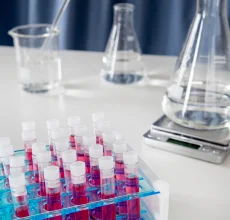
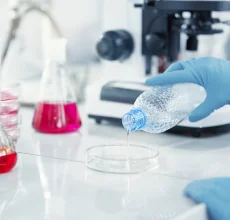
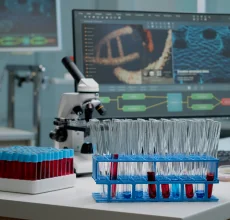
At PCU, practical learning is as important as classroom instruction. The School of Pharmacy's well-equipped laboratories give D.Pharm students direct, supervised experience with the equipment, techniques, and workflows they will encounter as pharmacy professionals. From preparing simple dosage forms to performing basic drug analysis, students graduate with confidence built through repetition and real practice — not just theory.
Key Laboratory & Training Experiences
Pharmaceutics & Dosage Form Lab — Preparation of tablets, capsules, ointments, syrups, and other dosage forms under supervised protocols.
Pharmaceutical Chemistry Lab — Drug identification tests, basic wet chemical analysis, and quality-control exercises.
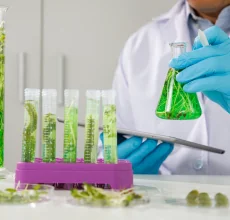
Pharmacognosy Lab — Macroscopic and microscopic identification of crude drugs, extraction, and standardisation of herbal materials.
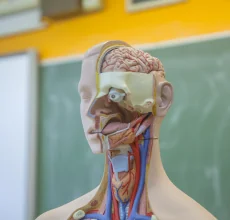
Anatomy & Physiology Lab — Study of body structures and system functions relevant to pharmacological action.
Biochemistry & Clinical Pathology Lab — Common clinical tests including blood glucose, urine analysis, and liver-function indicators.
Dispensing & Community Pharmacy Practice — Prescription reading, drug dispensing workflows, labelling, packaging, and patient-information exercises.
Hospital Pharmacy Simulation — Medication reconciliation, clinical documentation, and ward-pharmacy practice scenarios.
Internship / Practice Placement — Three-month real-setting exposure in approved community or hospital pharmacy environments.

Pharmaceutics & Dosage Forms
Pharmaceutical Chemistry
Pharmacognosy
Human Anatomy & Physiology
Pharmacology & Pharmacotherapeutics
Community Pharmacy & Management
Hospital & Clinical Pharmacy
Pharmacy Law & Ethics
Pharmaceutics & Dosage Forms
Pharmaceutical Chemistry
Pharmacognosy
Human Anatomy & Physiology
Pharmacology & Pharmacotherapeutics
Community Pharmacy & Management
Hospital & Clinical Pharmacy
Pharmacy Law & Ethics
From dispensing and storage to basic pharmacy‑practice skills.
Beyond subject knowledge, the D.Pharm programme at PCU builds a concrete set of transferable, employer-valued skills. By the time you complete the programme and your internship, you will be equipped to contribute professionally in a range of pharmacy and healthcare settings — working responsibly under qualified pharmacist supervision and growing towards independent practice over time.
Key Skills


From internships to community and hospital‑pharmacy practice.
D.Pharm at PCU is not just an academic programme — it is a professionally immersive experience. Students gain structured, regulated exposure to real pharmacy practice through their compulsory internship and through PCET's centralised placement cell, which maintains active connections with leading pharmaceutical companies, hospital pharmacy departments, and community pharmacy chains. All internship and practice placements are conducted in approved, regulated settings under qualified pharmacist supervision, ensuring students develop safe, responsible, and professional pharmacy habits from the outset.

Roles in pharmacy practice, industry, and onward‑study options.
A D.Pharm from PCU opens doors across a broad spectrum of pharmacy and healthcare sectors. Graduates are eligible to register as pharmacists (subject to PCI and state council norms) and take on meaningful roles in community pharmacy, hospital pharmacy, pharmaceutical manufacturing, regulatory affairs, sales, and academic settings. The diploma also serves as a recognised stepping stone into B.Pharm (Lateral Entry), M.Pharm, and Pharm.D pathways.
Employment Roles at a Glance
Community & Retail Pharmacy — Community Pharmacist, Retail Pharmacy Owner / Manager, Pharmacy Technician
Hospital & Clinical Pharmacy — Hospital Pharmacist, Clinical Pharmacy Aid, Long-term Care Pharmacist
Pharmaceutical Industry — Production Supervisor, Quality Control Analyst, Medical Representative, Research Assistant
Regulatory & Government — Drug Inspector, Regulatory Affairs Associate, Public Health Pharmacist, Military Pharmacist
Sales & Marketing — Product Manager, Sales Executive, Pharmacy Benefit Manager
Academia & Research — Lecturer/Instructor, Academic Researcher, Freelance Pharmacy Consultant / Writer
Further Education (Onward Pathway) — B.Pharm (Lateral Entry), M.Pharm, Pharm.D — D.Pharm is an approved qualification for lateral-entry B.Pharm in many states
How to apply for D.Pharm
Admission to D.Pharm at PCU follows the eligibility norms prescribed under ER 2020 by the Pharmacy Council of India. Programme Fee: ₹ 60,000 per year; Admission Fee: ₹ 10,000 (one-time). Scholarship and financial assistance options available.
Eligibility Criteria

A pass in the 10+2 examination (Science academic stream) with Physics, Chemistry, and Biology or Mathematics as compulsory subjects.
Any other qualification approved by the Pharmacy Council of India as equivalent to the above examination.
Minimum age of 17 years at the time of admission (as per applicable council norms).
Compliance with domicile and other regulatory requirements where prescribed.
Admission
Apply Online — Apply through the official PCU admissions portal: apply.pcu.edu.in
Submit Documents — Submit 10+2 mark sheets, transfer certificate, valid photo ID, and eligibility proof.
Selection Process — Attend the merit-based selection process or entrance evaluation (as applicable in the admission year).
Accept Your Offer — Receive and accept your admission offer letter.
Confirm Your Seat — Complete fee payment — Programme Fee: ₹ 60,000 per year; Admission Fee: ₹ 10,000.
D.Pharm (Diploma in Pharmacy) is a two-year diploma programme that prepares students for entry-level pharmacy practice — primarily in dispensing, drug store management, and community/hospital pharmacy support roles. B.Pharm (Bachelor of Pharmacy) is a four-year undergraduate degree with a broader scope, covering advanced pharmaceutical sciences, drug development, and research. D.Pharm graduates can transition into B.Pharm through the Lateral Entry pathway (available in many states), making D.Pharm a valuable stepping stone for aspiring B.Pharm students.
Turn your interest in medicines and patient care into an entry‑level pharmacy‑practice pathway.
Turn Your Passion for Medicines and Patient Care into a Meaningful Profession. D.Pharm at the School of Pharmacy, Pimpri Chinchwad University, gives you more than a diploma — it gives you a professional identity, a regulatory foundation, and a career pathway across one of India's fastest-growing healthcare sectors. Whether your goal is community pharmacy practice, hospital pharmacy, the pharmaceutical industry, or an eventual B.Pharm degree, D.Pharm at PCU is the right first step. Join a school with the faculty, facilities, and industry connections to make your pharmacy aspirations a reality.