




- Learn advanced UX research methodologies
- Develop expertise in interaction and product design
- Build scalable design systems and frameworks
- Work on real-world digital product challenges

Designing Digital Experiences for a Human-Centered Future
Develop the skills to research, design, prototype, and deliver
meaningful digital experiences that solve real-world challenges.
The M.Des UI/UX Design programme prepares students to design intuitive, meaningful, and user-centered digital products across web platforms, mobile applications, enterprise systems, emerging technologies, and interactive services.
The programme combines user experience research, interaction design, information architecture, interface systems, design strategy, usability engineering, prototyping, and product thinking to help students become future-ready UX professionals and product design leaders.
Students learn through advanced studio projects, industry collaborations, research-driven practice, usability studies, internships, portfolio development, and thesis-based exploration. The curriculum focuses on creating impactful digital experiences that solve real-world problems while balancing user needs, business goals, and technological possibilities.

Why Choose M.Des UI/UX Design?
Where Human-Centered Design Meets Digital Innovation
This programme is ideal for graduates who want to advance beyond interface creation and develop expertise in user research, product strategy, interaction design, and digital experience leadership.
Key Advantages
- Gain exposure to usability testing and analytics
- Collaborate with industry and research mentors
- Build a professional UX portfolio and case studies
- Prepare for leadership roles in design and innovation

Building Future-Ready UX Designers, Step by Step
A research-led learning journey that prepares students to design, innovate, and lead in the evolving digital landscape. The programme is structured to help students evolve from skilled practitioners into strategic UX designers, product thinkers, researchers, and experience leaders.
Research capability, problem framing, and interaction design methodologies.
Students begin with:
- User Experience Design
- User Research Methods
- Human-Centered Design
- Information Architecture
- Interaction Design
- Design Thinking & Innovation
- UX Case Studies
- Design Studio Practice
Students develop:
- Research capabilities
- User behavior analysis
- Problem-framing skills
- Interaction design methodologies
- Digital product thinking
- Experience strategy understanding
Students Learn
- User interviews and research
- Usability testing methods
- Journey mapping
- Information structures
- User flow creation
- Design validation frameworks

Download Detailed Curriculum
Pune Design School
- M.Des – UI/UX Design
What You Will Learn
Master user-centered design, UX research, interaction design, and digital product innovation to create impactful experiences.
Students learn to create intuitive interactions, user journeys, workflows, and navigation systems while developing visually engaging interfaces for web, mobile, and emerging digital platforms. The programme emphasizes UX research, design strategy, and evidence-based decision-making, alongside accessibility, service design, design ethics, and responsible innovation.
Core Areas of Study

User-Centered Product Design
Interaction Design
Mobile & Web UI Design
UX Research & Design Strategy
Design Systems & Component Libraries
Accessibility & Inclusive Design
Service & Experience Design
Design Ethics & Human-Centered Innovation

Skills Developed During the Programme
User research and usability testing
Interaction and experience design
Information architecture
User journey mapping
Wireframing and prototyping
Design system development
UX strategy and product thinking
User data analysis
Accessibility evaluation
Product innovation
Portfolio development
Professional communication and presentation


User research and usability testing
Interaction and experience design
Information architecture
User journey mapping
Wireframing and prototyping
Design system development
UX strategy and product thinking
User data analysis
Accessibility evaluation
Product innovation
Portfolio development
Professional communication and presentation

Industry Exposure & Product Innovation
The programme integrates internships, live projects, research collaborations, and thesis development to prepare students for advanced UX and product design careers.
The M.Des UI/UX Design programme emphasizes experiential learning through industry-sponsored projects, design challenges, internships, and collaborative research initiatives. Students work on real-world digital products, conducting user research, developing prototypes, testing solutions, and refining experiences based on stakeholder and user feedback. Through interactions with product companies, technology organizations, startups, and design consultancies, learners gain valuable exposure to professional workflows, product development processes, and emerging industry trends.

Career Pathways after M.Des UI/UX Designafter M.Des UI/UX Design
Graduates can pursue advanced careers across digital products, technology, innovation, and user experience industries.
Graduates of the M.Des UI/UX Design programme are prepared for leadership and specialist roles across technology companies, product organizations, startups, design consultancies, and innovation-driven enterprises. With expertise in user research, interaction design, product strategy, and experience design, they can work across the entire product lifecycle, from research and ideation to design, testing, and implementation.
- UX Designer
- Senior UX Designer
- Product Designer
- Interaction Designer
- UX Researcher
- Service Designer
- Design Systems Designer
- UX Consultant
- Experience Strategist
- Information Architect
- Product Experience Designer
- Design Researcher
- UX Lead
- Digital Experience Specialist
View Placement Highlights

View Placement Highlights
Begin Your Journey in User Experience Design
Take the first step toward becoming a UX professional through a portfolio-driven admission process focused on creativity, curiosity, and problem-solving.
Applicants seeking admission to the M.Des UI/UX Design programme should possess a bachelor’s degree in Design, Engineering, Technology, Fine Arts, Architecture, Computer Applications, or a related discipline from a recognized institution, subject to university eligibility requirements. The selection process typically evaluates academic performance, creative aptitude, problem-solving abilities, and design potential through portfolio review, personal interaction, and/or an entrance assessment. The programme welcomes learners from diverse academic backgrounds who aspire to build advanced expertise in UX research, interaction design, and digital product development.
Example Eligibility

Bachelor’s degree in Design, Engineering, Technology, Fine Arts, Architecture, Computer Applications, or related.
Portfolio showcasing design, interaction, digital product, or research work.
Personal interaction or entrance assessment (if applicable).

Admission Steps
- Step 01
Registration — Sign up with your name, email, and mobile. Verify via OTP/email to access your dashboard.
- Step 02
Pay Application Fee — View course details and pay securely using UPI, card, or net banking. Get instant receipt and email confirmation.
- Step 03
Take Entrance Exam — Choose your test slot (online/offline). Check syllabus and guidelines on your dashboard.
- Step 04
Check Merit List — Results are published on your dashboard. Get notified via SMS/email.
- Step 05
Download Offer Letter — If selected, download your signed offer letter and accept before the deadline.
- Step 06
Upload Documents — Submit required documents (ID, marksheets, etc.). Track approval status easily.
- Step 07
Final Enrollment — Pay final fees to confirm your seat. Get your welcome kit and orientation details.

Frequently Asked Questions
Yes. Graduates from design, technology, engineering, computer science, and related disciplines are eligible to apply.

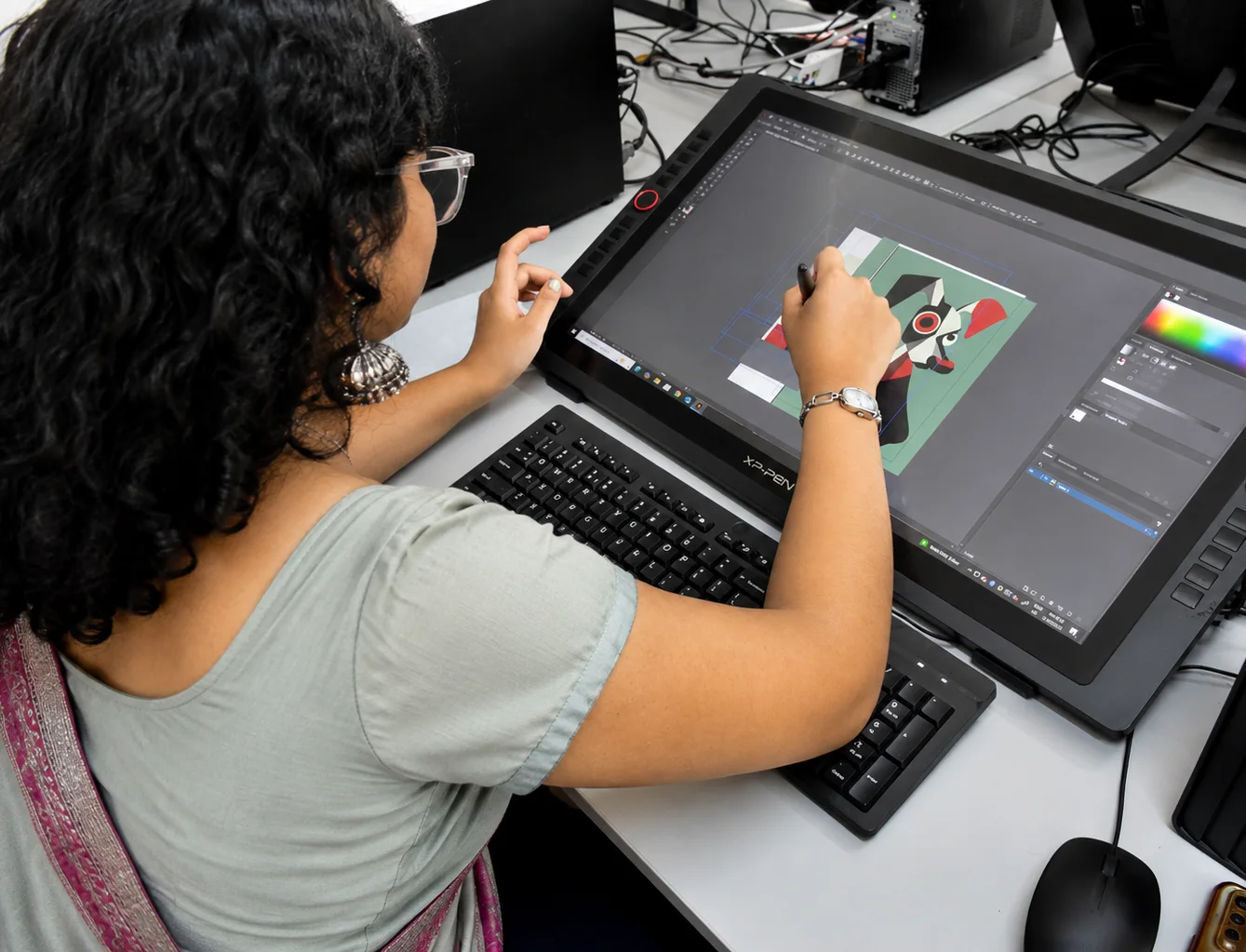
Shape the Future ofDigital Experiences at PCU
Advance your design, technology, or creative background through a specialised postgraduate programme in UI/UX Design.
Transform your ideas into meaningful digital products through advanced research, user-centred design, prototyping, and industry-led projects. The two-year M.Des UI/UX Design programme at the School of Design, PCU prepares you to create innovative, accessible, and impactful user experiences for the digital world.
