









Design and execute research‑projects in basic/applied‑sciences or nutrition‑&‑dietetics.
About the Programme
The Ph.D. – Science (All Streams) / Nutrition / Dietetics / Clinical Psychology at PCU is a multidisciplinary doctoral-research programme designed for postgraduates who aspire to advance scientific discovery, healthcare-innovation, and evidence-based practice. The programme enables scholars to pursue original and impactful research across disciplines such as physical sciences, life sciences, biotechnology, nutritional sciences, clinical dietetics, mental health, behavioural science, and psychological assessment. Through rigorous research-methodology, interdisciplinary collaboration, and academic mentorship, scholars develop analytical, clinical, and investigative expertise that contributes to scientific advancement, public health, and psychological well-being. The programme culminates in a doctoral dissertation, publications, and meaningful contributions to research, healthcare systems, and professional practice.

About the Ph.D. (Science / Nutrition & Dietetics / Clinical Psychology)
Advance your expertise in scientific research, nutrition, dietetics, and clinical psychology through interdisciplinary doctoral studies and evidence-based innovation.
This Ph.D. programme is designed for postgraduates in science, nutrition, dietetics, clinical psychology, and allied disciplines who seek to pursue advanced academic and applied research. The programme encourages interdisciplinary exploration across physical sciences, life sciences, behavioural sciences, mental health, and healthcare-oriented domains, enabling scholars to build strong analytical, research, and professional competencies.
In Science (All Streams), scholars may undertake research in areas such as physics, chemistry, biotechnology, mathematics, microbiology, environmental science, and life sciences. The Nutrition & Dietetics specialisation focuses on nutritional biochemistry, clinical nutrition, public-health nutrition, therapeutic diet-planning, and evidence-based dietetic practice. In Clinical Psychology, research may explore psychological assessment, counselling, behavioural therapy, mental-health interventions, cognitive studies, and community mental-health practices.
The programme follows a structured research-plus-dissertation model that includes coursework in research methodology, literature review, ethics, and domain-specific studies, along with regular progress reviews and academic evaluations. Scholars are guided by experienced faculty mentors to produce original research that contributes to scientific advancement, healthcare improvement, and psychological well-being.
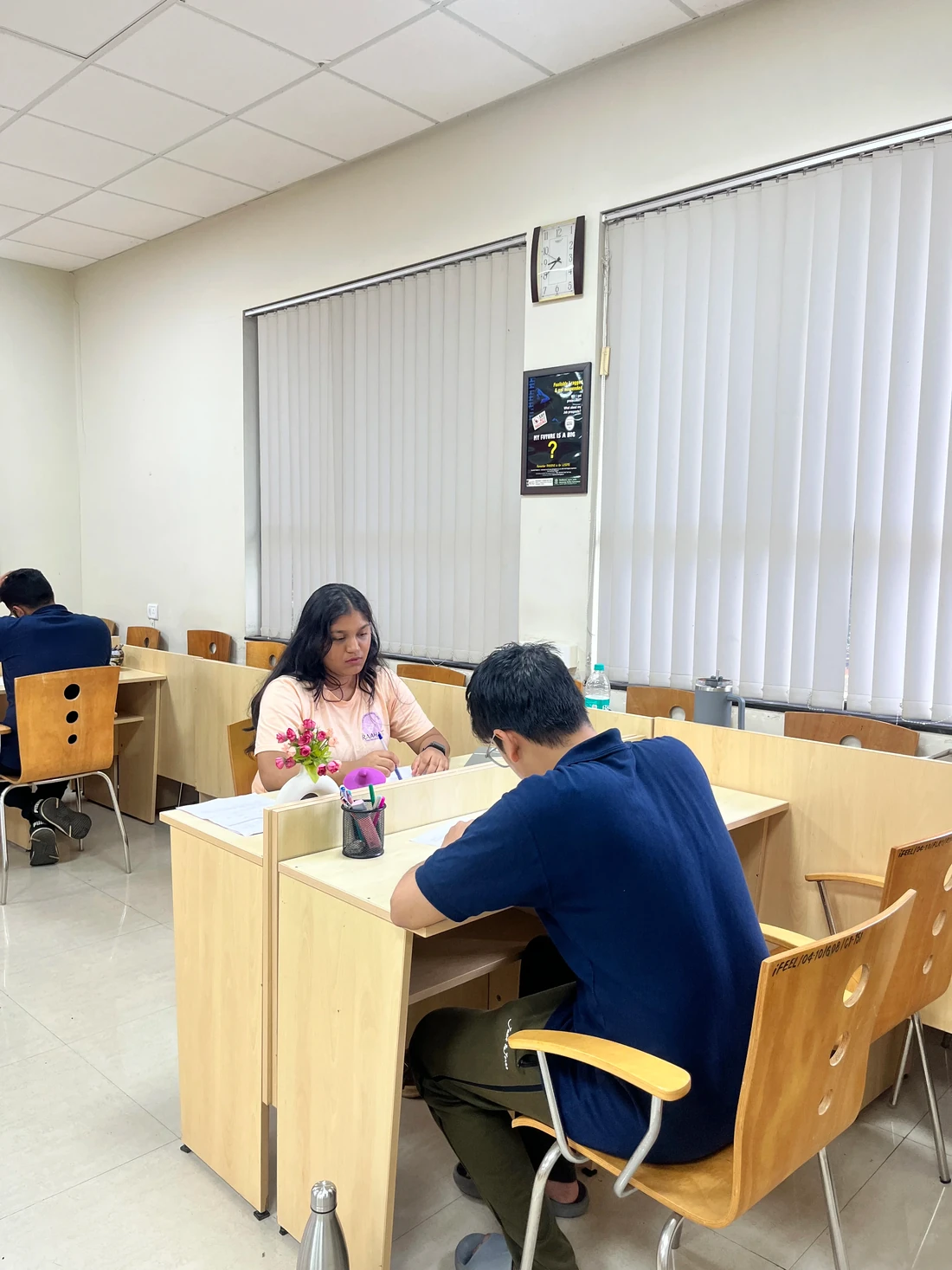
Duration: 3–5 Years Full / Part Time
Science (All Streams) – Physics, Chemistry, Mathematics, Biotechnology, Microbiology, Clinical Psychology etc.
Nutrition & Dietetics
Research Areas & Specialisations
Explore advanced research domains across science, nutrition, dietetics, and clinical psychology with opportunities for interdisciplinary innovation and impactful scholarly contribution.
Ph.D. candidates may pursue research in Science (All Streams), Nutrition, Dietetics, or Clinical Psychology, based on their academic background and research interests. Each specialisation is guided by experienced faculty and aligned with emerging scientific, healthcare, and mental-health priorities at national and global levels. The programme encourages interdisciplinary research, innovation, and evidence-based inquiry across theoretical, clinical, and applied domains.
Focus Areas:
Science(All Streams)
Areas :

Nutrition &Dietetics
Areas :

ClinicalPsychology
Areas :

How the Ph.D. Programme Progresses
Follow a structured doctoral journey with coursework, research development, periodic evaluations, and dissertation-based scholarly contribution.
The Ph.D. programme follows a structured research journey with clearly defined academic and research milestones. Scholars begin with coursework in research methodology and domain-specific subjects, followed by the development and approval of a research proposal. Regular progress reviews and guided research ensure continuous academic advancement under faculty supervision. Candidates then undertake original research, data analysis, and dissertation writing in their chosen specialisation. The programme concludes with thesis submission, research publication opportunities, and a viva-voce examination as per university doctoral guidelines and research standards.
Compact Flow (Milestone‑driven)
- Year 1
Registration, orientation, coursework (if applicable), identification of research‑area and supervisor.
- Year 1–2
Literature‑review, research‑proposal, and first‑progress/qualifying‑review.
- Year 2–4
Intensive research, data‑collection, and interim‑reviews.
- Final Year
Dissertation writing, pre‑viva‑voce, viva‑voce, and degree‑awarding process.
Download Ph.D. Syllabus
Ph.D. – Doctor of Philosophy
- Ph.D. Syllabus & Coursework
Research, Labs & Science Infrastructure
Access advanced laboratories, research facilities, and interdisciplinary scientific infrastructure that support innovation, experimentation, and impactful doctoral research.
Ph.D. scholars gain access to well-equipped laboratories, research centres, and academic infrastructure aligned with their area of specialisation. Students in Science (All Streams) utilise advanced facilities in physics, chemistry, biotechnology, microbiology, life sciences, and analytical research for experimental and interdisciplinary investigations. Scholars in Nutrition & Dietetics work with nutritional biochemistry labs, food-analysis facilities, clinical nutrition environments, and public-health nutrition research resources. Clinical Psychology researchers may engage with psychological assessment tools, counselling and behavioural research settings, and mental-health data analysis frameworks. The research ecosystem supports innovation, experimentation, evidence-based inquiry, and high-quality scholarly output across scientific and healthcare disciplines.

Access to core‑science‑labs (Physics, Chemistry, Biotechnology, Microbiology, Clinical Psychology etc.).
Instrumentation‑labs (spectroscopy, chromatography, microscopy, molecular‑biology‑tools).
Nutrition‑and‑dietetics‑labs: nutrient‑analysis, food‑composition, anthropometry, clinical‑nutrition‑datasets.
Support for data‑management, statistics, and scientific‑writing.
Guidance for publication‑in‑journals and research‑presentations.
Skills & Research Outcomes
Develop advanced research, analytical, scientific, clinical, and problem-solving skills for academic, healthcare, and interdisciplinary professional excellence.
By the completion of the Ph.D. programme, scholars will be able to design, conduct, and evaluate original research within their chosen specialisation in science, nutrition, dietetics, or clinical psychology. They will develop advanced skills in data analysis, scientific writing, critical thinking, and evidence-based problem solving. Scholars will also gain experience in publishing research papers, presenting findings at academic forums, and applying interdisciplinary research methodologies. The programme further strengthens communication, leadership, mentoring, and project-management abilities required for careers in academia, research institutions, healthcare organisations, and allied professional sectors.
Key Skills
Design and execute research‑projects in basic/applied‑sciences or nutrition‑&‑dietetics.
Use advanced‑analytical‑and‑instrumentation‑methods or nutrition‑assessment‑tools.
Analyse experimental or epidemiological‑data using statistical‑and‑modelling‑techniques.
Publish research‑papers and present at conferences.
Mentor junior researchers and contribute to lab‑or‑community‑nutrition‑projects.
Use advanced‑analytical‑and‑instrumentation‑methods or nutrition‑assessment‑tools.
Analyse experimental or epidemiological‑data using statistical‑and‑modelling‑techniques.
Publish research‑papers and present at conferences.
Mentor junior researchers and contribute to lab‑or‑community‑nutrition‑projects.
Career Pathways After Ph.D.
Explore diverse career opportunities across academia, research institutions, healthcare, nutrition, clinical psychology, and scientific innovation sectors.
Ph.D. graduates are equipped for advanced careers in universities, research institutions, healthcare organisations, hospitals, and interdisciplinary scientific sectors. Depending on their specialisation, scholars may pursue opportunities in academia, biotechnology, pharmaceuticals, food and nutrition industries, clinical research, mental-health services, public-health organisations, and policy or consulting roles. The programme prepares graduates for leadership positions in research and development, teaching, clinical practice, counselling, scientific innovation, and evidence-based healthcare initiatives. Their doctoral training also supports careers in publishing, advanced consultancy, and collaborative national and international research projects.
Roles

Assistant / Associate Professor (Science / Nutrition & Dietetics / Clinical Psychology)

Research Scientist / Senior Scientist in R&D (Pharma, Biotech, Food & Nutrition)

Nutritional Biochemist / Public Health Nutritionist

Dietetic Consultant / Clinical Nutrition Specialist

Science‑Researcher in Government‑Sponsored‑Labs (CSIR, DBT, ICMR‑linked, etc.)

Consultant or Faculty in Allied‑Health / Nutrition‑and‑Dietetics‑Programmes
Apply Now
Admission & Eligibility
How to apply for Ph.D. (Science / Nutrition & Dietetics / Clinical Psychology)
Admission to the Ph.D. programme is open to candidates holding a postgraduate degree in science, nutrition, dietetics, clinical psychology, or related allied disciplines from a recognised university. Eligible applicants may include graduates from fields such as Physics, Chemistry, Biotechnology, Life Sciences, Food Science, Nutrition, Dietetics, Psychology, and other relevant specialisations. Candidates are required to fulfil university eligibility criteria and may need to appear for an entrance examination and/or personal interview. Applicants are also expected to submit a preliminary research synopsis aligned with their proposed area of doctoral research.
Eligibility:

M.Sc. / M.Phil. / M.S. / M.Nutr. / M.Diet. or equivalent in relevant discipline.
Minimum aggregate as per university‑policy (e.g., 55–60% for general category, with relaxations for reserved categories).
UGC‑NET‑JRF / CSIR‑NET / GATE / university‑level‑test scores may be considered where applicable.

Key Steps in the Admission Process
- Step 01
Apply through the official PCU Ph.D. / Research‑admission portal.
- Step 02
Submit documents (postgraduate‑mark‑sheets, degree, entrance‑test‑scores, and research‑synopsis/area‑declaration).
- Step 03
If applicable, appear for entrance‑test or interview.
- Step 04
Accept admission offer and be assigned a supervisor/area.
Frequently Asked Questions
The Ph.D. programme is generally completed within a minimum duration of 3 years and a maximum duration of 5 years as prescribed by university and regulatory guidelines. Extensions, if applicable, are governed by university research regulations.


Advance Scientific & NutritionalResearch at PCU
Turn your postgraduate‑science‑or‑nutrition‑background into groundbreaking research and innovation.
Transform your academic foundation in science, nutrition, dietetics, or clinical psychology into impactful research and meaningful innovation. Join PCU’s Ph.D. programme to work on advanced scientific and healthcare challenges under expert mentorship and interdisciplinary research support. Contribute to new knowledge, publish influential research, and build a future as a researcher, academician, healthcare expert, or scientific leader.
